You are about to spend real money on a single tooth, and you want to know it will still be there in twenty years. That is a fair question to ask before you commit.
Most dental implants last 15 years or longer, and many last the rest of your life. The titanium post that anchors the implant often lasts decades. The visible crown on top usually needs replacing every 10 to 15 years. How long yours lasts depends mostly on your gum health, your daily cleaning, and steady dental checkups.
At Smile for Life in Wenatchee, Dr. Erik Holmberg has placed and restored teeth as a general dentist for more than 30 years. That kind of history means he has watched what actually keeps an implant healthy over decades, not just in the first year.
What to know before you invest in implants
- The implant post often lasts 20 years or more. The crown on top usually needs replacing every 10 to 15 years.
- Long-term reviews find more than 90 percent of implants still working at the 10-year mark.
- The biggest threat is peri-implantitis, a gum infection that affects roughly 1 in 5 implant patients.
- Smoking, uncontrolled diabetes, and nighttime grinding all shorten implant life. Each one is manageable.
- Book a cleaning and implant check every six months to catch small problems early.
How long do dental implants really last?
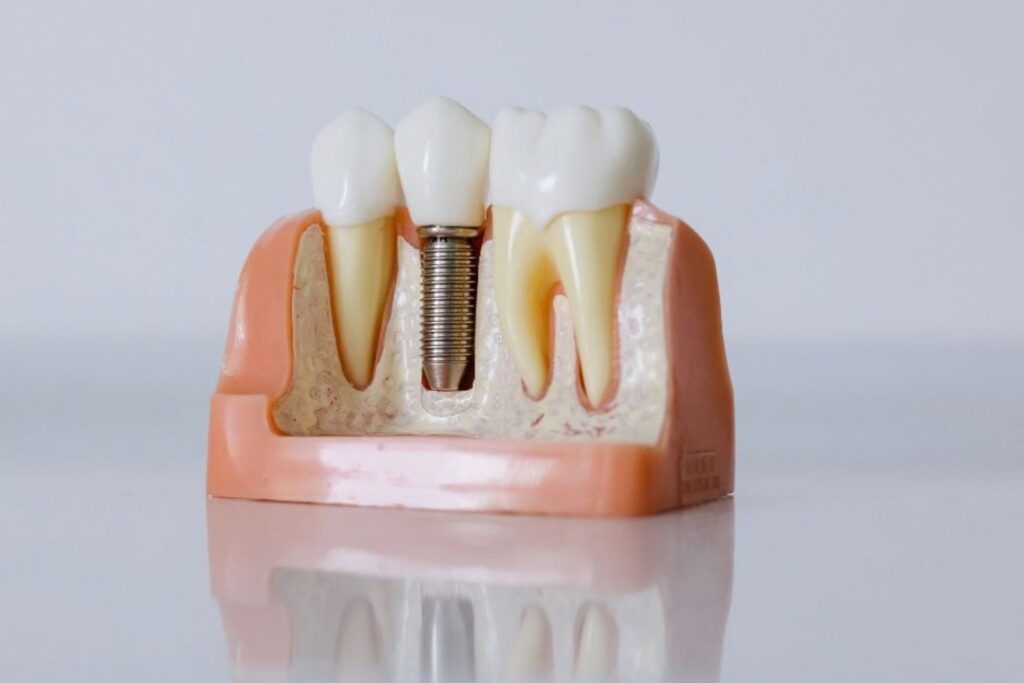
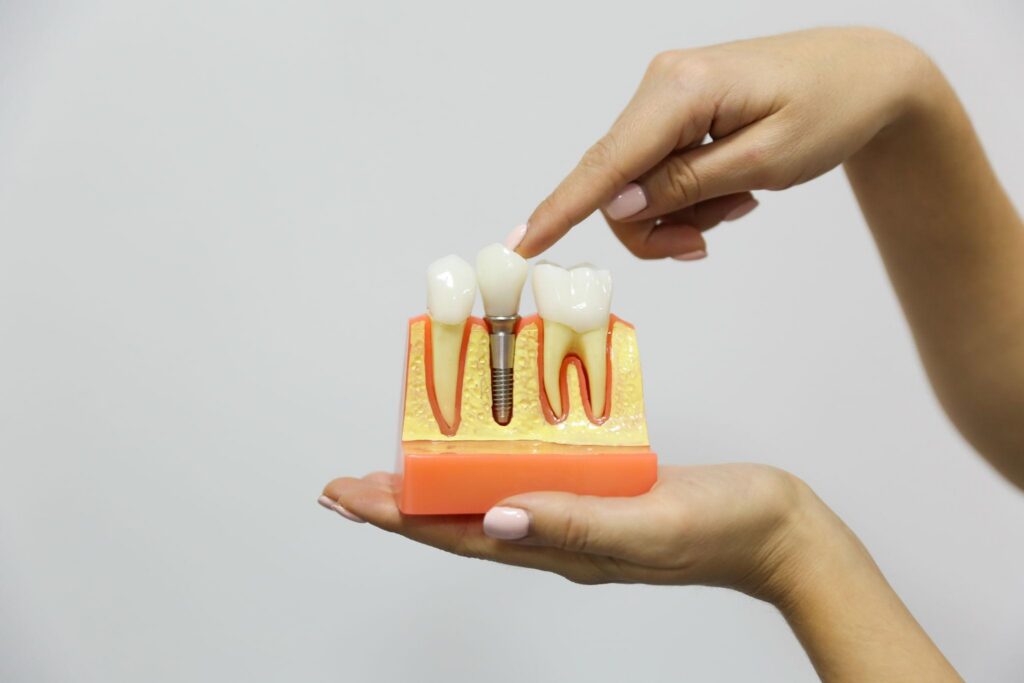
A dental implant has two lifespans, not one. The titanium post fused into your jaw commonly lasts 20 years or more, and often a lifetime. The crown, the tooth-shaped part you chew with, usually lasts 10 to 15 years before wear or a chip calls for a swap. Replacing a crown is far simpler than replacing the whole implant.
That split surprises a lot of patients. People expect one number, and they hear two. Once you picture the implant as a foundation and the crown as the visible part on top, the timelines make sense. The foundation holds for the long run. The part that does the chewing wears down like anything else you use every day.
The titanium post that anchors everything
The post is a small titanium screw placed into your jawbone. Over three to six months, bone grows tightly around it. Dentists call this osseointegration, the bond that fixes the post in place. Once that bond forms, the post rarely moves. Titanium holds up well inside the body, which is why many posts last for decades. Strong, healthy bone is what keeps it that way.
The crown you actually chew with
The crown takes all the daily force of biting and grinding. That is why it wears faster than the post underneath it. Most crowns made from porcelain or ceramic last 10 to 15 years. Back molars handle more pressure, so crowns there may wear sooner than front teeth. When a crown wears out, your dentist can usually replace just the crown and leave the post untouched.
What the 10-year success rates show
Dental implants have a strong track record. Reviews of long-term research find more than 90 percent of implants still in place at 10 years. Survival stays near 88 percent even at the 20-year mark. The American Academy of Implant Dentistry reports that about 3 million Americans already have implants, with roughly 500,000 more placed each year. Few dental treatments carry that kind of history.
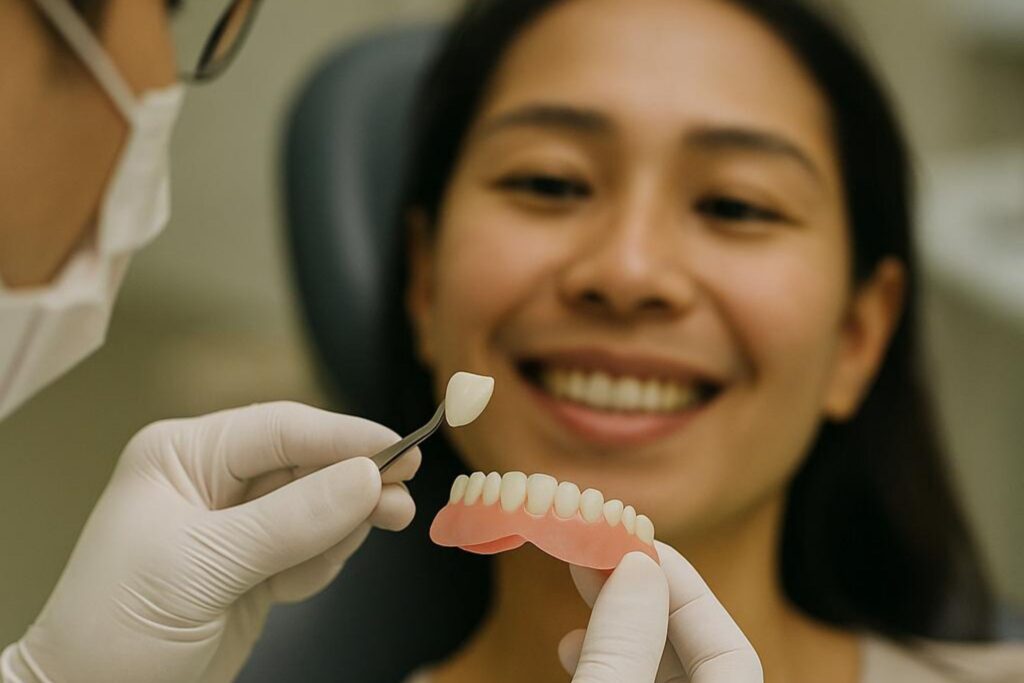
It helps to compare implants to the other options. A traditional bridge usually lasts 10 to 15 years and leans on the teeth beside it. Removable dentures often need adjusting or replacing every 5 to 10 years as the jaw changes shape. An implant stands on its own and, with care, tends to outlast both.
Why do some implants fail early?
Most implant problems trace back to the gums and bone around the implant, not the implant itself. The main culprit is peri-implantitis, an infection that eats away at the bone holding your implant in place. Smoking, uncontrolled diabetes, and teeth grinding all raise the risk. The good news is that each of these is something you and your dentist can act on.
Peri-implantitis starts as gum inflammation and spreads to bone if you ignore it. A systematic review by the American Academy of Periodontology and the Academy of Osseointegration found it affects roughly 1 in 5 implant patients. Early signs include red or puffy gums, bleeding when you brush, and a bad taste that will not clear. Caught early, it is often treatable.
Smoking is one of the clearest risks. Research on smokers puts implant failure near 11 percent, compared with about 5 percent in people who do not smoke. Smoke slows healing and cuts blood flow to your gums. Uncontrolled diabetes and nighttime grinding add strain too. None of these rule out implants. They just mean planning and follow-up matter more.
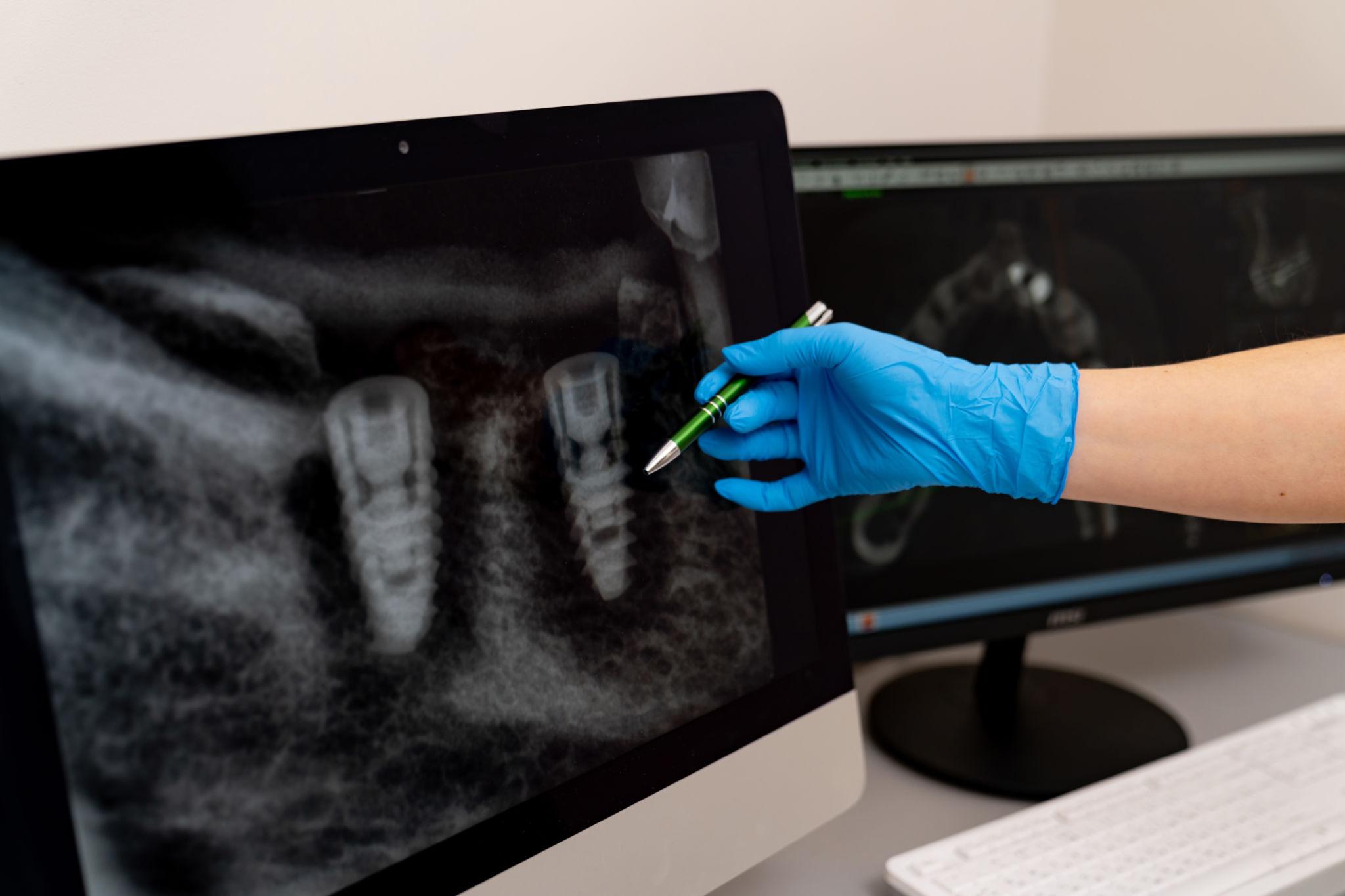
Bone quality matters just as much. An implant needs enough healthy bone to hold it, so your dentist checks the site with X-rays or 3D imaging before placing anything. If the bone is thin, a graft can build it up first. That extra step protects the implant for years to come.
How can you make your implants last longer?
You protect an implant much like a natural tooth, with a few extras. Brush twice a day, clean around the implant daily, and skip tobacco. If you grind your teeth at night, wear a custom night guard. These habits, plus regular checkups, are what push an implant well past the 15-year mark.
The first few months set the tone. While the bone fuses to the post, your dentist will steer you toward softer foods and careful cleaning around the site. Getting that early window right helps the bond form fully, and a solid bond is what carries the implant through the decades that follow.A few daily habits do most of the heavy lifting:
- Brush twice a day and clean under the crown with floss or a water flosser, where plaque loves to hide.
- Wear a night guard if you grind or clench, since that force can crack a crown or loosen the post.
- Quit smoking, or cut back as much as you can, to protect the bond between bone and implant.
- Skip chewing ice and hard candy, which can chip even a sturdy crown.
Professional cleanings help as well, and they are safe for implants. Hygienists use special instruments that clean around the post without scratching it. That gentle care removes buildup you cannot reach at home.
Keeping your other teeth and gums healthy helps too. Gum disease anywhere in your mouth raises the risk around an implant. Steady home care keeps the whole system stable, tooth by tooth.
Why do checkups matter so much for implants?
An implant cannot feel pain, so it will not warn you when trouble starts. That is why professional checks matter. At a routine visit, your dental team measures the gum around the implant, takes X-rays of the bone, and adjusts your bite if needed. Small issues found at six-month cleanings rarely turn into lost implants.
Bone loss around an implant is often silent in the early stages. An X-ray catches it long before you would notice anything. Your hygienist also removes hardened plaque that home brushing cannot reach. For most people, a cleaning and implant check every six months is the right rhythm. Some need to come in more often, and your dentist will tell you if that applies to you.
These visits also catch a high spot on your bite. Uneven pressure quietly stresses an implant over time, and a quick adjustment fixes it. That is the kind of small correction you never notice yourself, which is exactly why the checkup earns its place.
Implants built to last in Wenatchee
Long-lasting implants start with a solid foundation, and that means healthy bone. At Smile for Life in Wenatchee, the team can rebuild lost bone with bone and gum tissue grafting before placing an implant. That gives the post a stronger base from the very first day. The same practice that places your implant also handles your routine cleanings and checkups, so one team tracks your implant year after year.
Dr. Erik Holmberg founded Smile for Life more than 30 years ago. He works alongside Dr. Brian Mooney, Dr. Eric Nelson, and Dr. Kyle Gurtler. As general dentists, they place implants and care for them over the long haul. That continuity matters for a restoration meant to last decades. The office sees patients Monday through Thursday, which makes those six-month checks easier to keep on the calendar.
The practice serves Wenatchee along with East Wenatchee, Cashmere, Malaga, and nearby communities. For people in the valley, that means implant care and follow-up stay close to home, year after year.
If you are weighing implants, or you already have one and want it to last, the next step is a straightforward exam. Call Smile for Life in Wenatchee at (509) 663-1161 to book a visit with Dr. Erik Holmberg and the team. A short appointment now can add years to your implant later.