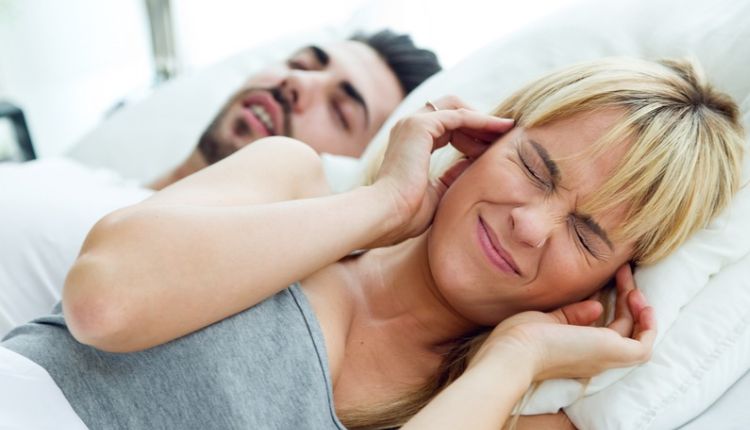
You lie awake at 2 a.m. while the person next to you rattles the walls. Or maybe you are the one who wakes up dry-mouthed and tired, with a partner who gave up and moved to the couch. Snoring affects about 45 percent of adults at least now and then, says the American Academy of Sleep Medicine.
The good news: you have real choices beyond a CPAP mask. Custom oral appliances, sleep position changes, and simple habit shifts can reduce or stop snoring for many adults. The right option depends on what causes your snoring.
Dr. Erik Holmberg, a general dentist with over 30 years of clinical work in Wenatchee, screens snoring patients and fits custom oral appliances at Smile for Life.
Key takeaways if snoring keeps your household awake
- About 45 percent of adults snore at least some nights, and roughly 25 percent snore most nights, per the American Academy of Sleep Medicine.
- Custom oral appliances cut snoring for most patients and work without noise, hoses, or power.
- Side sleeping instead of back sleeping can reduce snoring by up to 50 percent for people whose snoring depends on position.
- The American Academy of Sleep Medicine and the American Academy of Dental Sleep Medicine both recommend oral appliance therapy for adults with primary snoring.
- A sleep screening at Smile for Life in Wenatchee can help figure out if your snoring needs a clinical fix or something simpler.
Why do people snore?
Snoring happens when air flows past relaxed tissue in the throat and makes it vibrate. During sleep, the muscles in your tongue, soft palate, and throat loosen. If those tissues narrow the airway, air passes through a tighter space at higher speed. That faster flow shakes the soft tissue and creates sound.
Several things make snoring worse. Extra weight around the neck squeezes the airway. Alcohol relaxes throat muscles more than normal sleep does. Lying on your back lets gravity pull the tongue backward. Nasal issues like allergies or a bent septum force mouth breathing, which adds to throat vibration.
Not all snoring points to a health problem. Primary snoring, the kind without breathing pauses or oxygen drops, affects millions of adults. But loud, frequent snoring paired with gasping or daytime fatigue may signal obstructive sleep apnea. In that condition, the airway fully collapses during sleep. A sleep study is the only way to tell the two apart.
Can you stop snoring without a machine?
Yes. CPAP treats moderate to severe obstructive sleep apnea, but most people who snore do not have sleep apnea at all. For primary snoring and mild cases, other options work without a machine on your nightstand.
The American Academy of Sleep Medicine and the American Academy of Dental Sleep Medicine issued a joint guideline. It recommends oral appliance therapy for adults with primary snoring. The same guideline covers adults with sleep apnea who cannot use CPAP or want something different. These are not drugstore boil-and-bite strips. Effective oral appliances are custom-fitted by a trained dentist and adjusted over time.
Habit changes also make a real difference. The strongest data supports weight loss, sleep position shifts, and keeping alcohol away from bedtime. Many patients see results from habit changes alone. Others need an appliance to get the rest of the way there. Some patients combine both approaches for the clearest nights.
Over-the-counter options like nasal strips, chin straps, and throat sprays get heavy marketing. Some of these help with nasal airflow or mouth breathing. But none of them reposition the jaw or open the airway the way a custom appliance does. The AASM guideline specifically recommends custom, titratable devices over non-custom options.
Habits that reduce snoring
Three changes have solid backing in clinical research. Weight loss tops the list. A study in the American Journal of Respiratory and Critical Care Medicine found that losing just 10 percent of body weight cut sleep-disordered breathing in overweight adults. A neck size above 17 inches for men or 16 inches for women raises snoring risk.
Sleep position matters too. Back sleepers snore more because gravity pulls the tongue and palate toward the throat. Switching to your side can cut snoring by half for people with position-linked snoring. Wearable bumpers and smart trackers can help you stay off your back through the night.
Alcohol and sedatives loosen throat muscles well beyond what normal sleep does. Skipping drinks for at least three to four hours before bed lets those muscles keep more tone. Even one glass of wine within that window can turn a quiet sleeper into a snorer.
Nasal issues deserve attention too. Saline rinses, allergy pills, and nasal strips can keep the nose clear. A clear nose reduces the mouth breathing that makes snoring worse. If a deviated septum blocks your airflow, that may need its own check with an ear, nose, and throat doctor.
These changes often help on their own. When they fall short, an oral appliance is the next step.
How does a dental oral appliance work?
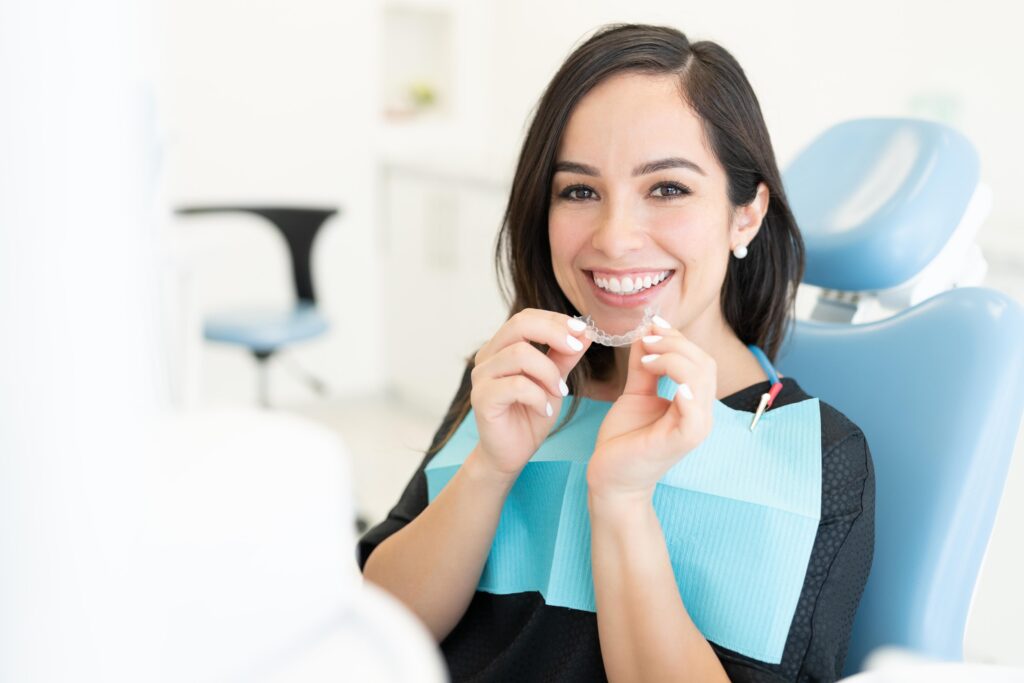
A custom oral appliance is a small, two-piece device that fits over the upper and lower teeth. Think of a retainer or a sports guard. It holds the lower jaw slightly forward during sleep. That small shift opens the airway behind the tongue and stops the tissue collapse that causes snoring.
The American Academy of Dental Sleep Medicine updated its standards for oral appliance therapy in 2025. The update confirms that custom, titratable devices fitted by trained dentists remain the standard approach. Titratable means the dentist can adjust how far forward the jaw sits. Fine-tuning happens over several visits until snoring stops and the fit feels right.
The process starts with impressions or digital scans of your teeth. A lab builds the device to match your jaw. You come back for fitting, and the dentist adjusts the device over the next few weeks based on your sleep results.
Oral appliances make no noise. They need no power or water. They fit in a pocket when you travel. Research reviewed by the AASM shows that patients wear oral appliances more often than CPAP masks, mostly because they find them easier to sleep with every night.
Oral appliances compared to CPAP
Both options open the airway, but they work in different ways and fit different situations.
| Factor | CPAP | Custom oral appliance |
| How it works | Pushes air through a mask to hold the airway open | Holds the jaw forward to stop tissue collapse |
| Treats | Mild, moderate, and severe OSA | Primary snoring, mild to moderate OSA |
| Noise | Machine hum | Silent |
| Portability | Needs power and a water tank | Fits in a small case |
| Nightly use | 50 to 60% of users struggle with regular wear | Higher wear rates in AASM-reviewed research |
| Side effects | Dry mouth, mask leak, skin marks, closed-in feeling | Short-term jaw stiffness, minor bite shifts over time |
| Fitted by | Sleep doctor or equipment supplier | Trained dentist |
| Typical cost | $500 to $3,000, plan dependent | $1,800 to $2,500, often covered by medical insurance |
For severe obstructive sleep apnea, CPAP remains the go-to option because it handles complete airway collapse with steady air pressure. For primary snoring and mild to moderate sleep apnea, clinical data supports oral appliance therapy. Many patients who gave up on CPAP find that an oral appliance gives them something they can wear every night without a fight.
When should you see a dentist about snoring?
Snoring that happens most nights, loud enough to wake someone else, is worth looking into. If a partner has seen pauses in your breathing, or if you feel wiped out each morning after a full night in bed, a sleep screening should come first.
A screening rules out or confirms obstructive sleep apnea. Primary snoring without apnea can move right to treatment. Snoring with confirmed apnea may call for CPAP, an oral appliance, or both, depending on severity. The diagnosis guides the plan.
You do not need to see a sleep specialist first for routine snoring. A dentist trained in sleep medicine can screen you, help set up a home sleep test if needed, and move to appliance fitting once results come back. Many patients find that the path from screening to a working appliance takes just a few weeks.
Ignoring loud snoring carries its own costs. Poor sleep raises the risk of high blood pressure, daytime fatigue, car accidents, and strain on relationships. Treating the snoring treats more than the sound.
Bed partners lose sleep too. One study from the Mayo Clinic found that bed partners of snorers lost about an hour of sleep per night. Fixing the snoring often gives two people a better night, not just one.
Snoring treatment in Wenatchee, WA
Smile for Life offers sleep screening consultations and custom oral appliance therapy at 222 N. Mission St. in Wenatchee. Dr. Erik Holmberg has over 30 years of experience treating families across the Wenatchee Valley, including patients from East Wenatchee, Cashmere, and the surrounding area. The practice fits mandibular advancement devices for patients with primary snoring and for those who cannot use CPAP.
The process at Smile for Life starts with a screening consultation. If a home sleep test confirms a need for treatment, the team moves to appliance fitting. Follow-up visits fine-tune the device until it works.
If snoring is hurting your sleep or your partner’s sleep, call Smile for Life at (509) 663-1161 to book a sleep screening. You can also request an appointment at smileforlifewenatchee.com. The office is open Monday through Thursday, 8 a.m. to 5 p.m.